The Red Line Premium: How Transit Repriced the Office Map
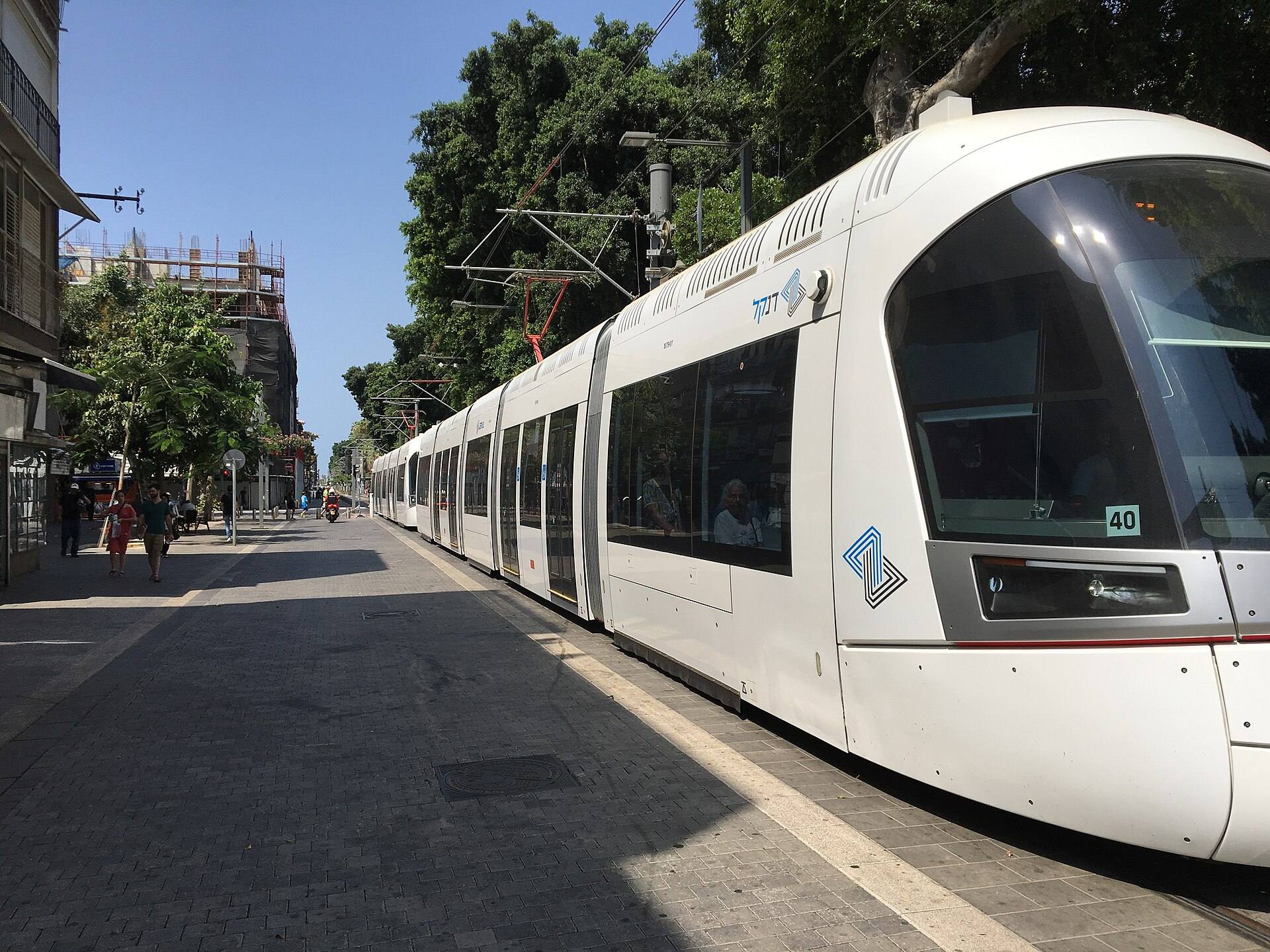
A Red Line train on Jerusalem Boulevard, Jaffa
The Tel Aviv light rail changed the commercial geography of the city, and a significant number of tenants are still negotiating against the map that existed before it.
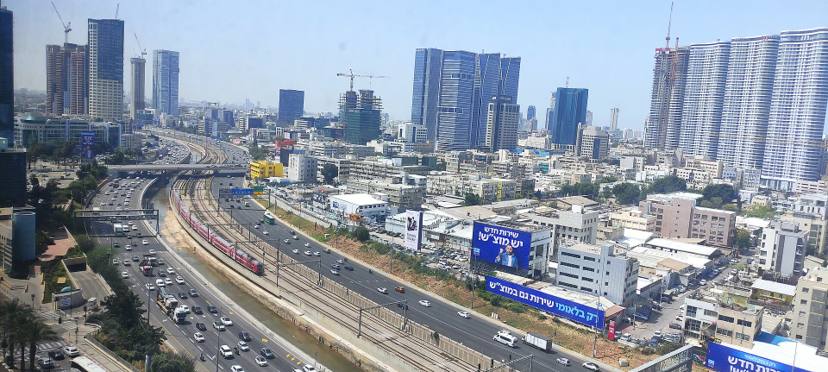
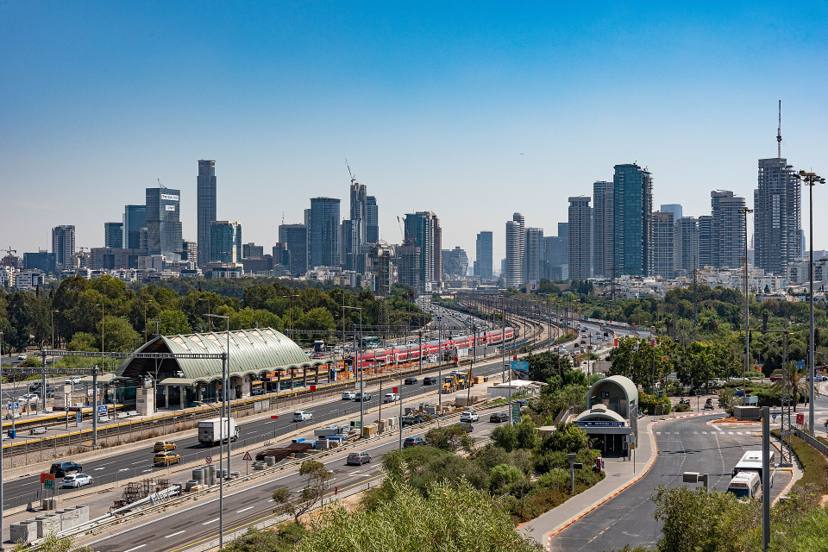
The precise effect is harder to pin down than market talk suggests: we found no published survey that measures rent or vacancy building by building against walking distance to a station. But the direction is clear. Newmark Natam's survey of the first half of 2026 found Tel Aviv's most sought-after office districts, the newer areas close to public transport such as Menachem Begin Road, about 99% occupied, against 93% to 95% in less sought-after parts of the city. Begin Road, which the Red Line runs beneath, also posted the city's highest rents, up 3% to about ₪151 per m².
Outside Tel Aviv the link is even more explicit. According to Newmark Natam's Or Ben Zvi Klein, connection to the light rail has become the most decisive factor in choosing offices outside the city, and Class A occupancy rose in Bnei Brak and Petah Tikva, both on the line.
What is less obvious is what the premium for that access is actually buying, and why the companies pushing back on it are usually optimising the wrong number.
The premium is a recruiting cost, not a rent cost
Consider two buildings of similar age and specification. One sits four minutes from a station, the other eleven. Across a full floor, the rent difference adds up to real money every year.
Now consider the same two buildings from the perspective of a candidate weighing an offer, or an employee deciding whether Sunday is a day worth commuting for.
Eleven minutes on foot at each end of the journey, in Tel Aviv weather, is not a marginal inconvenience. It is the difference between a commute that works on public transport and one that quietly requires a car, which in this city means parking, which means cost and time the employee absorbs personally.
Companies competing for the same engineers in the same city are competing on this whether they have noticed or not. The rent line is visible and appears in the budget. The recruiting effect is invisible and appears in time-to-hire, in offer acceptance rates, and in attendance.
One of those numbers is easy to see. The other is larger.
Why occupancy is the more telling number
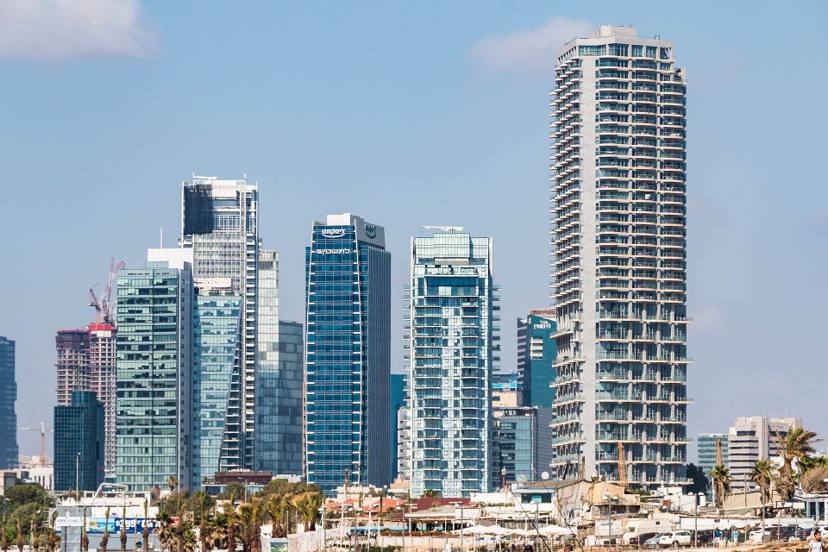
Higher rents in the best-connected districts could be explained by many things, not least that they are also where the newest towers stand. Occupancy of around 99% is harder to explain away.
That figure says the premium is not aspirational pricing by optimistic landlords. It says the space clears at that price, consistently, with almost nothing sitting empty. The market has already made this judgment and is expressing it through occupancy rather than through asking rents.
When a category of building is both more expensive and more fully occupied than its alternatives, the pricing is not a distortion. It is information.
What this did to the buildings that missed
The corollary is less comfortable. Assets outside the walking radius did not simply become slightly less desirable. They moved into a different competitive set.
They are now competing primarily on price, against each other, for tenants whose requirements do not include transit access, while the buildings inside the radius compete for everyone else at rents the outside group cannot reach.
For owners of those assets, the response is rarely to match on rent, which is a losing position. It is to compete on something the transit-adjacent buildings cannot easily offer: larger contiguous floor plates, parking ratios, flexibility on term, or delivery condition.
For tenants
Two practical implications.
If you are inside the radius, the premium is defensible and you will not negotiate it away, because near-full occupancy tells the landlord they do not need you. Spend the negotiating capital elsewhere, on term flexibility, on fit-out contribution, on expansion rights.
If your requirements genuinely do not depend on transit access, you are in an unusually strong position. You are one of a limited pool of tenants for a large body of stock that has lost its most valuable audience, and that is where real concessions live right now.
The underlying point
Infrastructure repriced the map faster than the market's mental model updated. That gap is where the mispricing sits, in both directions, and it will not stay open indefinitely.