Shell-and-Core or Turnkey: The Fit-Out Decision
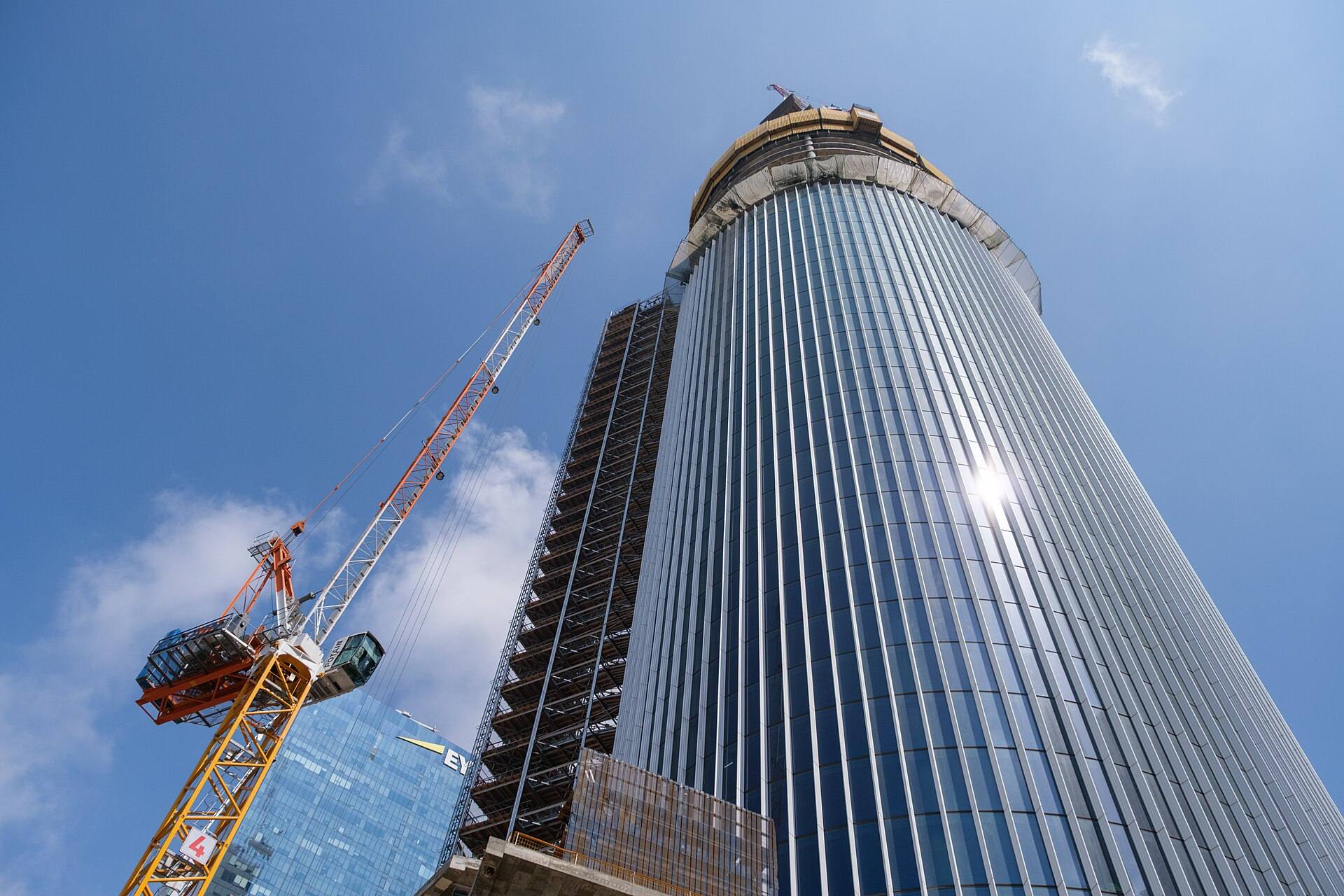
The Azrieli Spiral tower under construction, March 2026
Two companies tour the same tower in Tel Aviv. Same floor, same view, same building services. One signs at the low end of the range, one at the high end. Neither negotiated badly.
The difference is delivery condition, and it is the largest controllable variable in a commercial lease. It is also the one most tenants decide last, at the point when they have the least leverage to decide it well.
The two ends of the range
Shell-and-core means what it says: a floor with structure, core services and little else. Floors, ceilings, partitions, lighting, cabling, kitchen, meeting rooms and the rest are the tenant's programme, executed on the tenant's budget and the tenant's timeline.
Turnkey means the space arrives usable. The landlord delivers a specified fit-out, and the cost is embedded in the rent across the term.
Published deals show how wide the gap can be. In a 2024 lease at the ONE tower in Petah Tikva's Kiryat Matalon, Calcalist reported rent of ₪40-45 per square metre at shell level against about ₪80 at finished level: close to double. Prime Tel Aviv headline numbers sit far higher (recent deals in the Azrieli Sarona tower were reported at ₪180-185 per square metre in March 2026), and Globes notes that in large deals the quoted rent is often for the shell alone, with the tenant fitting out the interior afterward. A rent figure means little until you know which delivery condition it describes.
Why the cheaper number is often the more expensive deal
A shell-and-core lease looks like a saving because the comparison being made is rent against rent. It is the wrong comparison.
The tenant taking shell-and-core is also taking on a construction project: design, permitting, contractor selection, procurement, supervision, and the gap between the budget at kickoff and the number at completion. That last item has a direction, and it is not downward.
Add to it the months of paying rent on a space nobody can occupy yet, and the management attention of a team that has other work to do.
Amortised across the term, a build-out the tenant executes badly can cost more per square metre than the turnkey premium it was avoiding. The saving was real on the term sheet and imaginary by the second year.
When shell-and-core is genuinely right
It is the right answer more often than the above suggests, but for specific reasons.
A company with a strong view on how its space should work, an operations or workplace function capable of running the programme, and a long enough term to amortise the investment, will build something better than a landlord specification and will own the value of it.
Companies with unusual technical requirements have no real alternative. And a longer term changes the arithmetic materially, because the same capital is spread over more years.
The condition that matters is capability. A company that has never run a fit-out and has nobody whose job it is to run one is not saving money by choosing shell-and-core. It is deferring a cost and adding risk.
When turnkey is right
Speed is the usual reason, and it is a good one. A company that needs to be operational in weeks rather than the many months a fit-out requires is not really choosing; the timeline has chosen.
Predictability is the second. Turnkey converts a variable capital cost into a fixed operating cost. For a company that would rather not have a construction budget on its books, that trade is worth paying for.
Shorter terms point the same way. Building out a space you will leave in three years rarely recovers the investment.
The mistake, stated plainly
The error is not choosing wrong. It is choosing late.
Most tenants tour buildings first, fall in love with a floor, and only then work out how it will be delivered. By that point the emotional commitment is made, the alternatives have been dismissed, and fit-out is being negotiated from the weakest possible position. Calcalist reported in September 2025 that office developers were giving tenants rent-free periods and fit-out funding in larger amounts than before; a tenant who has already committed is poorly placed to capture them.
The companies that get this right invert the order. They settle the delivery question before viewing anything, then look only at inventory that matches. It sounds obvious written down. It is close to unheard of in practice.
The number to ask for
Not rent per square metre. Total occupancy cost per employee per month over the full term, with fit-out amortised and the rent-free construction period included.
That figure is comparable across delivery conditions and across buildings. The rent quote is not, and it is the only number most tenants ever look at.
Sources
- Calcalist: Shekel insurance agency leases 4 floors in the Sasson Hugi tower in Petah Tikva (May 2024)
- Calcalist (CTech): Unicorns Wonderful and Eon replace Meta at Tel Aviv's Sarona Tower (March 2026)
- Globes: JFrog in advanced talks to lease 14,000-sq.m in Tel Aviv tower (May 2025)
- Calcalist: The office market, Tel Aviv holds steady but surrounding cities struggle to lease (September 2025)